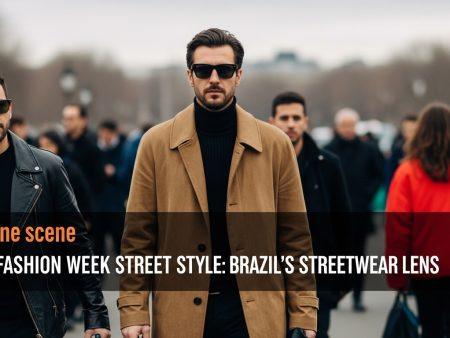
inside Street Style Brazil: A deep-dive into how Brazilian streetwear evolves across cities, blending climate, culture, and digital influence to shape the.
tendencia-br.comBrazil street style news and analysis.
Inside Street Style Brazil: Brazil’s Urban Fashion Pulse
Updated: April 17, 2026
inside Street Style Brazil offers a lens on how climate, mobility, and digital culture intersect on Brazilian sidewalks, shaping what passes for citywear in Rio, São Paulo, and beyond.
The pulse of Brazilian streets
The pulse of Brazilian streets is a tangible mix of heat, rhythm, and mobility. In climate-diverse cities like Recife, Salvador, Rio de Janeiro, and São Paulo, street wear prioritizes breathable fabrics, quick-drying blends, and adaptable layers. The daily commute is a living runway; a single jacket can work from a humid morning to a cooler evening. The color language reflects local culture—neon accents on muted bases in São Paulo, vibrant hues in the northeast—creating a city-by-city mosaic. Street style here is not just about aesthetics; it’s a weather and movement strategy, a practical system of dressing that travels well across neighborhoods and social scenes.
From runway to pavement: local identities
Global fashion houses seed inspiration, but Brazil’s streets cultivate distinct vocabularies. São Paulo’s fashion ecosystem, with design studios and local ateliers, translates high concepts into everyday wear; Rio’s brands often emphasize coastal ease and craft heritage. Osklen, Reserva, and FARM illustrate this bridging of luxury technique with street practicality, while local artisans contribute prints and textures rooted in regional stories. The result is a language of silhouettes—slightly oversized tops balanced by tailored trousers, cargo pockets integrated for daily life, and textiles chosen for sun resistance and rain resilience. This is the core of inside Street Style Brazil: a living dialogue that blends international trends with Brazilian know-how and climate realities.
Digital influence and practical styling
Social platforms accelerate trends, but Brazilian street style remains grounded in functionality. Short-form videos motivate quick swaps and capsule wardrobes; yet buyers prioritize comfort, durability, and repairability. Sneakers continue to anchor outfits, while materials with breathability and stain resistance extend wear in tropical weather. The street-level practice is to layer thoughtfully: a light jacket over breathable tees, a scarf that doubles as sun protection, or a belt bag for hands-free movement. The digital layer amplifies regional voices, turning a neighborhood look into an emblem that can travel to other cities, creating shared references while preserving local tweaks.
Sustainability and value in streetwear
As cities grow more conscious of environmental footprints, Brazilian streetwear increasingly centers on durability, repairability, and regional production. Small producers emphasize upcycling and repair culture, while larger labels highlight traceability and fair labor practices. This dynamic shapes a practical approach to dressing: invest in multipurpose pieces, prioritize tailoring to extend life, and choose fabrics suited to Brazil’s climate. The result is street style that wears better, travels farther, and reflects a philosophy of value rather than fast fashion. Across city blocks, inside Street Style Brazil demonstrates how economic considerations and creative expression can converge into a sustainable urban uniform.
Actionable Takeaways
- Invest in breathable, quick-drying fabrics suitable for Brazil’s climate to extend wear across seasons.
- Support local Brazilian brands that emphasize durability and repairability over disposable fashion.
- Prioritize versatile layers and practical pockets to adapt from commute to social time without a full outfit change.
- Choose sizes or tailoring that balance comfort with shape, enabling movement and longevity.
- Curate color and print choices to reflect local culture while staying adaptable to urban settings.
Source Context
From an editorial perspective, separate confirmed facts from early speculation and revisit assumptions as new verified information appears.
Track official statements, compare independent outlets, and focus on what is confirmed versus what remains under investigation.
For practical decisions, evaluate near-term risk, likely scenarios, and timing before reacting to fast-moving headlines.
Use source quality checks: publication reputation, named attribution, publication time, and consistency across multiple reports.
Cross-check key numbers, proper names, and dates before drawing conclusions; early reporting can shift as agencies, teams, or companies release fuller context.
When claims rely on anonymous sourcing, treat them as provisional signals and wait for corroboration from official records or multiple independent outlets.
Policy, legal, and market implications often unfold in phases; a disciplined timeline view helps avoid overreacting to one headline or social snippet.