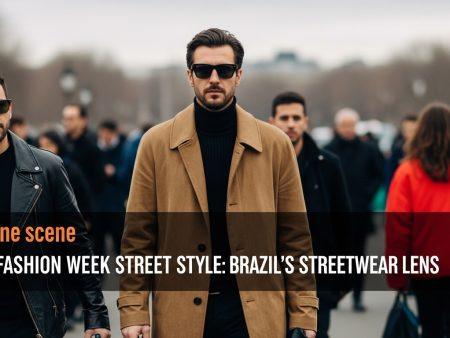
A deep, practical analysis of how Street Style Brazil reveals urban values, labor dynamics, and global influence shaping Brazil’s fashion scene from youth.
This analysis examines how Street Style Brazil has evolved from the sidewalks of São Paulo and Rio into a global lens on urban identity and commerce. By tracing outfits, collaborations, and neighborhood markets, the piece shows how fashion is both a mirror of daily life and a driver of economic opportunity for designers, vendors, and musicians alike. The streets, often overlooked as a mere backdrop for photographs, function as crowded laboratories where taste, labor, and policy intersect. In a country marked by regional diversity and a volatile economy, streetwear is not only about aesthetics but about forecasting shifts in what Brazilians value, how they work, and how they imagine belonging in public spaces: how Street Style Brazil has become a practical barometer for social change as much as for taste.
Context: Street Scenes as Economic Barometer
Across Brazilian cities, street style operates as a living ledger that records how people earn, spend, and socialize. The outfits people wear to markets, bus stops, and weekend fairs signal access to resources, but they also reveal the constraints of urban logistics—how quickly a market can clear inventory, how far a designer can travel to source fabrics, and how small businesses weather currency swings and inflation. In this context, fashion becomes a form of labor documentation. When a kid in a borrowed denim jacket posts a look on a mobile device, it is not merely a pose; it is a signal of informal economies, apprenticeship chains, and a pathway to small-scale entrepreneurship that often sits outside formal employment statistics. The phenomenon shows how Street Style Brazil captures not just aesthetics but the resilience of ordinary workers who convert limited means into creative capital, a dynamic that remains vital as Brazil negotiates macroeconomic shifts and policy changes that affect urban life.
Social platforms accelerate this process, turning sidewalks into studios and corners into runways. In practical terms, the street becomes a testing ground where designs must endure humidity, rain, and crowded heat while remaining legible to a global audience. The result is a clothes-language that travels quickly, but the meanings behind silhouettes, colors, and silhouettes are deeply rooted in local labor markets, supply chains, and transit systems. This is precisely why the inquiry into how Street Style Brazil operates matters beyond fashion journalism: it reveals how communities organize work, negotiate access to materials, and translate street-level energy into commercial potential that can scale to boutique labels and digital marketplaces alike.
The Supply Chain of Style
Behind every striking street silhouette sits a chain of choices: fabric availability, local manufacturing capacity, and the informal networks that connect designers with artisans and small retailers. In many neighborhoods, cutting and sewing happen in shared studios or home workshops that rely on regional supply hubs. This distributed model has several implications. First, it democratizes production, allowing first-time designers to launch collections with minimal capital. Second, it fosters collaboration across urban networks, enabling rapid prototyping and cheaper customization for customers who demand personalization. Third, it makes the sector sensitive to shocks—from currency swings to port delays—that ripple through the price of textiles and the speed at which goods can reach stores and buyers online. The upshot is that fashion in Brazil today is as much about logistics and negotiation as it is about style. When a local brand riffs on a familiar silhouette with a new fabric or print, the value emerges not solely from aesthetics but from the speed and reliability of its supply chain in a volatile environment.
Digital marketplaces and social commerce are reshaping how designers access markets. Pix and other quick-payment methods expedite transactions between makers and customers who are increasingly used to direct-to-consumer drops. In this setting, the street style ecosystem aligns with broader economic trends: it rewards efficiency, adaptability, and storytelling that resonates across platforms. The result is a fashion ecosystem where the line between consumer and producer blurs, enabling interested buyers to participate in the design process through feedback loops, pre-orders, and limited-run releases. The implications for urban policy and labor regulation are meaningful: as street-level fashion becomes a more formalized portion of the economy, questions about fair pay, working hours, and safety in informal workshops come to the fore, demanding nuanced governance that recognizes both creativity and worker protections.
Generational and Regional Micro-scenes
Brazilian street style cannot be monolithic; it is a tapestry of regional micro-scenes that reflect climate, geography, and cultural history. In coastal cities, lighter fabrics, vibrant prints, and fluid silhouettes respond to heat and outdoor living, while inland and southern regions favor heavier materials and structured shapes that convey resilience. Within cities, generations diverge in their approach to aesthetics and tech. Older cohorts often anchor looks in heritage references or DIY repairs that push stories of repair and reuse forward, while younger practitioners lean into modular, remixable pieces designed for fast shoots and urban mobility. The result is a spectrum where a look in São Paulo may collide with a parallel trend in Recife or Belo Horizonte but still speaks a common language about mobility, labor, and belonging. The micro-scenes also reveal how gender expression, queerness, and non-binary fashion are increasingly visible on the street, challenging traditional codes and expanding the social script around who can participate in public style spaces.
Regional differences matter for brands and photographers who seek to map audiences; local slang in print, color palettes, and accessory choices become signals that create a sense of place while inviting cross-city experimentation. The street thus functions as both a teacher and a platform—educating new designers in how to craft garments suited to the realities of local life and providing a testing ground for ideas that could travel to international markets if they manage to resonate with global consumers seeking authentic, story-driven fashion experiences.
Global Gaze and Local Opportunity
As Brazilian street style gains global attention, international brands and media outlets increasingly view the country as a laboratory for urban fashion narratives. The appeal lies not just in bright colors or bold prints but in the way street style intertwines with everyday work, commerce, and social life. Global brands eye partnerships with local designers who understand the logistics of supply, the rhythms of city life, and the subtleties of consumer demand in a country of immense regional variation. Fashion weeks and pop-up platforms abroad now feature Brazilian designers who started on the street, validating the idea that urban style can translate into viable, scalable products without sacrificing cultural specificity. This dynamic creates a feedback loop: global attention elevates local talent, which in turn expands opportunities for manufacturing jobs, creative training, and small business formation across cities. Yet the global gaze also carries risk, including potential cultural commodification and the pressure to conform to external narratives about Brazilian identity. The most durable successes will hinge on authentic storytelling, fair collaboration, and a willingness to sustain long-term local development rather than short-term trendy capsules.
Actionable Takeaways
- Support local designers with access to affordable fabrication hubs and mentorship to scale from streetwear to sustainable production lines.
- Encourage cross-city collaboration among micro-enterprises to share resources, materials, and distribution networks while maintaining cultural nuance.
- Leverage street style as a community-led indicator for urban policy discussions, especially around informal labor protections and small-business financing.
- Invest in training programs for photographers and designers that emphasize storytelling, ethical sourcing, and inclusive representation.
- Balance global attention with local impact by prioritizing transparent partnerships and fair labor practices in all collaborations with international brands.
Source Context
For readers seeking broader context on urban life and social dynamics that intersect with street culture, the following pieces provide related perspectives from varied angles: