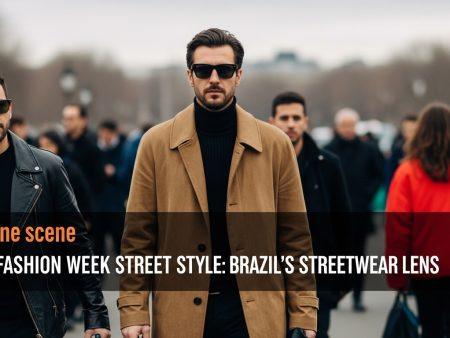
In flooded Brazilian streets, mud Street Style Brazil emerges as a practical, expressive lens on urban resilience. This analysis traces how climate shocks.
tendencia-br.comBrazil street style news and analysis.
Mud Street Style Brazil: Fashion and Resilience in Flooded Cities
Updated: April 15, 2026
From the waterlogged avenues of urban Brazil to sidewalks where neighbors trade stories, mud Street Style Brazil has moved from curiosity to a key editorial lens. The floods that swept through several states left muddy streets on which residents improvise gear, adjust silhouettes, and signal community resilience through practical aesthetics.
Context and Trends
Brazil’s climate reality is increasingly marked by heavy rainfall that overwhelms aging drainage systems and urban planning gaps. In cities across the country, mud becomes a shared surface, a canvas on which daily life gets reinterpreted through clothing that favors function over form alone. Street style observers note that the mud shifts color palettes toward earthy tones while elevating the role of visibility and protection. Earthy browns, olive greens, and rust hues mirror the environment, yet the addition of reflective trims and high-contrast accents helps pedestrians and riders remain seen in low light conditions after storms. This practical aesthetic is not merely defensive; it also serves as a social signal of solidarity and adaptability, a trend amplified by mobile-first communities that document improvised wardrobe fixes and durable gear in real time.
The phenomenon dovetails with broader urban resilience discourse: fashion becomes a daily public utility, a form of micro-infrastructure that communicates preparedness, mobility, and identity. As equipment and fabrics evolve to tolerate mud, humidity, and slick surfaces, the street becomes a testing ground for concepts that brands, makers, and hobbyists translate into accessible pieces. In short, mud Street Style Brazil is less about one cut or logo and more about a modular, adaptive approach to dressing for unpredictable city life.
Social media plays a crucial role in legitimizing and circulating these looks. Local creators highlight how garments can be layered, repurposed, and repaired—traits that align with sustainability narratives while remaining deeply personal. The result is a nuanced dialogue: fashion as a practical safeguard against weather, and as a mirror to the city’s evolving public space where everyone negotiates mud, water, and urban pressure in equal measure.
Designing in Mud: Materials, Color, and Utility
Designers and street stylists are gravitating toward durably engineered pieces that can withstand mud and humidity while still allowing self-expression. Footwear leans toward ankle-high boots with lug soles, waterproof or water-repellent pants, and jackets with sealed seams and adjustable hems. Pockets—ample, secure, and easy to access—are a recurrent feature, enabling users to carry phones, keys, and transit passes without sacrificing mobility on uneven surfaces. Materials emphasize abrasion resistance and easy cleaning, with flexible, breathable shells layered over moisture-wicking bases to balance protection and comfort in changeable meteorological conditions.
Layering is a core principle. Lightweight shells are paired with insulating mid-layers that can be stripped down if rain subsides or layered back up when mist returns. Color usage balances practicality with personality: earthy ground tones for camouflage against mud, punctuated by bright yellows, corals, or electric blues to improve visibility and express individuality. The silhouettes favor modularity—garments that can be cinched, zipped, or detached to adapt to street contingencies, commutes, or impromptu shelter—reflecting a broader shift toward flexible, functional fashion that travels well from street to transit to shelter.
Accessorial gear—ponchos, gloves, hats, and rain-capable bags—joins the wardrobe as a practical toolkit. While the look remains rooted in utility, it preserves individuality through prints, textures, and subtle branding that communicate taste without sacrificing function. This pragmatic aesthetic challenges traditional fashion hierarchies by validating everyday gear as legitimate design rather than mere weather protection.
Street Style Signals: Climate, Mobility, and Inclusivity
Crucially, mud Street Style Brazil reveals how climate and mobility shape urban culture. Clothing choices reflect not only weather but also how people move through flooded or slick streets. People on foot, cyclists, and riders on shared micro-mobility devices all require durable, grippy footwear and protective layers that don’t hinder motion. The street becomes a moving stage where practicality and presence converge, allowing diverse participants to contribute to the scene without compromising safety or comfort.
Inclusivity is increasingly visible in local reporting and micro-influencer coverage. Posts highlight a spectrum of ages, body types, and communities navigating similar weather challenges, creating a shared vernacular that transcends class lines. As representation grows, the practices of repair, reuse, and remix—reinterpreting second-hand pieces or repurposing industrial gear—gain legitimacy as socially responsible expression. Meanwhile, municipal realities—drainage, public transport, and street cleanliness—shape how style is captured and discussed, reinforcing the idea that fashion in crisis zones is as much about collective adaptation as it is about personal taste.
Actionable Takeaways
- Invest in waterproof outer layers with sealed seams and adjustable cuffs to maintain warmth and dryness without sacrificing mobility.
- Choose footwear with deep treads and water-resistant uppers to navigate mud and slick surfaces safely.
- Adopt modular wardrobes: pieces that can be layered, detached, or repurposed for shifting weather and daily routines.
- Incorporate reflective accents or high-visibility colors to improve safety during low-light conditions post-storms.
- Support durable, repairable garments and consider upcycling to extend life cycles and reduce waste in flood-prone cities.