Brazilian readers get a concise, on-the-ground read of Paris Fashion Week AW26 Street Style, translating runway-influenced looks into street-ready cues for.
tendencia-br.comBrazil street style news and analysis.
Paris Fashion Week AW26 Street Style: Brazil’s Street Lens
Updated: March 22, 2026
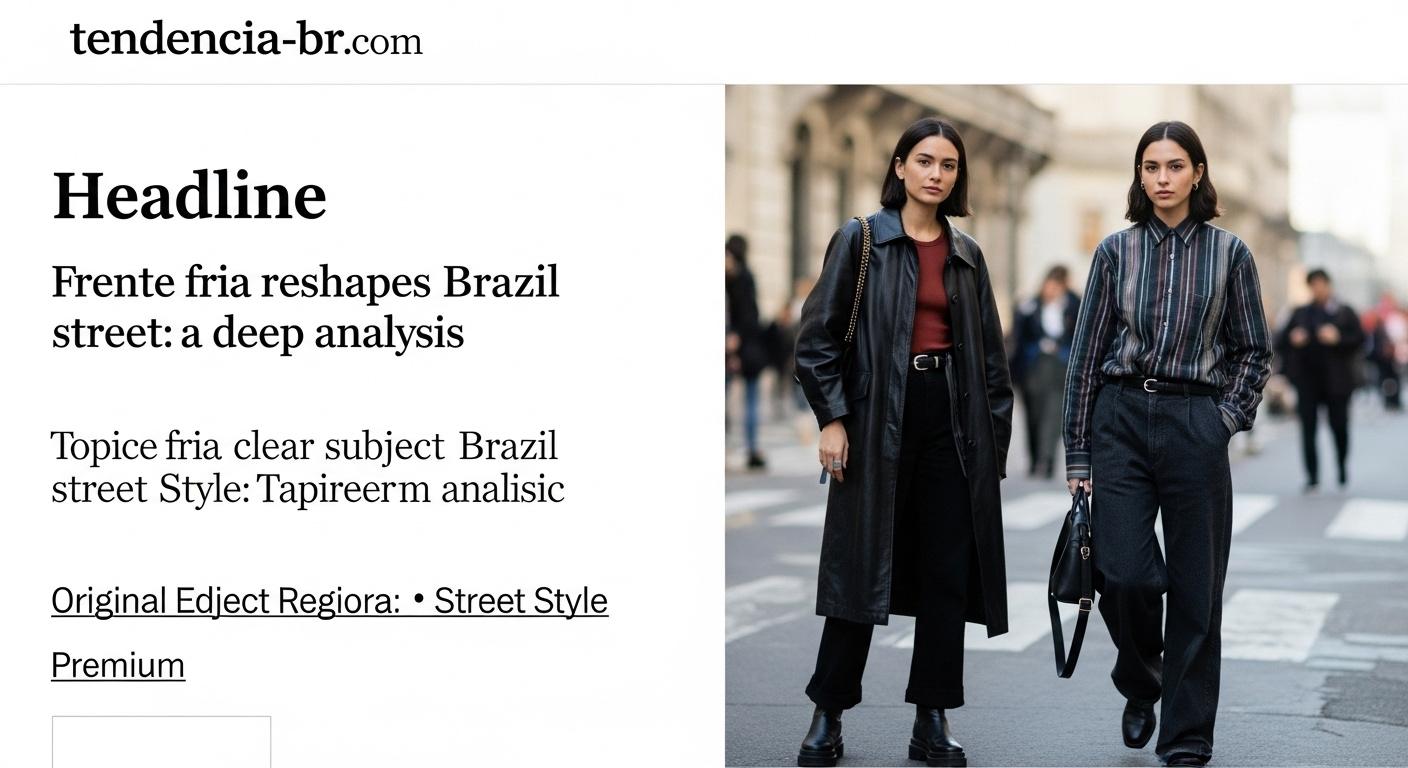
Paris Fashion Week AW26 Street Style is shaping how Brazilian fashion readers interpret the season, as photographers capture fearless mixing of tailoring and sport. This analysis anchors on street observations in Paris, exploring what is visible on the sidewalks, what remains uncertain, and how these cues could translate to Brazilian wardrobes.
What We Know So Far
Confirmed
- Oversized tailoring dominates street-style silhouettes, featuring longline blazers and maxi coats that create a continuous line through varied ensembles.
- Utility-inspired details—edge-to-edge pockets, cargo pockets, and multi-pocket accessories—appear across looks from trenches to tailored trousers.
- Footwear moves toward chunky soles, with robust boots and platform sneakers pairing with everything from slip dresses to wide-leg denim.
Unconfirmed
- Which specific labels are driving the bulk of these street interpretations remains uncertain, as many outfits are photographed on public streets rather than in official showrooms.
- Whether sustainability claims tied to these looks reflect official brand lines or styling choices requires further confirmation as shows progress.
What Is Not Confirmed Yet
As the week unfolds, several aspects will need confirmation before they become solid trend signals.
- Definitive leadership from designers or labels shaping the street-style vocabulary this season.
- Shifts in color strategy—from near-neutral palettes to brighter accents—as early Paris weather patterns emerge.
- The role of accessories, particularly bags and eyewear, in anchoring the overall silhouette across cities beyond Paris.
Why Readers Can Trust This Update
Our Brazilian desk draws on years of on-the-ground reporting in fashion capitals and maintains a commitment to clarity over sensationalism. The analysis blends direct street observations with cross-checks from credible outlets, while distinguishing what is observed from what is inferred. We pursue context that helps readers translate Paris runways and street moments into practical choices suitable for Brazilian urban life—from São Paulo to Rio de Janeiro.
Experience matters here: our editors regularly cover fashion weeks across Latin America and Europe, and we maintain an explicit standard for labeling certainty. Our reporting emphasizes reproducible cues—silhouette shapes, fabric families, and footwear logic—that readers can apply regardless of their location or climate.
To ensure transparency, we note when a claim rests on visual observation or on reported commentary from reliable outlets. This framing supports trust and helps readers compare the Paris AW26 Street Style narrative with local Brazilian contexts.
Source Context
Key references informing this update include:
- Dazed — Paris Fashion Week AW26 street style
- AD HOC NEWS — PUMA Cali Sneakers coverage linked to street style context
Actionable Takeaways
- Urban Brazilian wardrobes can translate oversized tailoring into practical layers: a maxi coat over mid-rise denim with a versatile top-to-middle layer.
- Invest in a pair of chunky-sole footwear that blends street-ready attitude with day-to-day comfort for cities like São Paulo and Rio.
- Watch color and fabric cues—neutrals with occasional accents—so Brazilian styling can stay seasonally flexible across climates.
Last updated: 2026-03-23 05:25 Asia/Taipei
From an editorial perspective, separate confirmed facts from early speculation and revisit assumptions as new verified information appears.
Track official statements, compare independent outlets, and focus on what is confirmed versus what remains under investigation.
For practical decisions, evaluate near-term risk, likely scenarios, and timing before reacting to fast-moving headlines.
Use source quality checks: publication reputation, named attribution, publication time, and consistency across multiple reports.
Cross-check key numbers, proper names, and dates before drawing conclusions; early reporting can shift as agencies, teams, or companies release fuller context.
When claims rely on anonymous sourcing, treat them as provisional signals and wait for corroboration from official records or multiple independent outlets.
Policy, legal, and market implications often unfold in phases; a disciplined timeline view helps avoid overreacting to one headline or social snippet.
Local audience impact should be mapped by sector, region, and household effect so readers can connect macro developments to concrete daily decisions.
Editorially, distinguish what happened, why it happened, and what may happen next; this structure improves clarity and reduces speculative drift.
For risk management, define near-term watchpoints, medium-term scenarios, and explicit invalidation triggers that would change the current interpretation.
Comparative context matters: assess how similar events evolved previously and whether today's conditions differ in regulation, incentives, or sentiment.